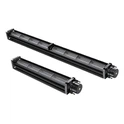
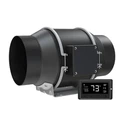
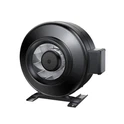
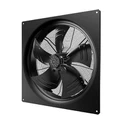
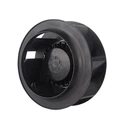
Cross flow fans function via a complex yet efficient process. The process involves a brushless DC motor and electronic control. Below is the detailed process of how dc type cross flow fans operate:
Power supply - the DC Motor Cross flow fan is connected to a power source, mostly an AC power line. This power is converted and regulated via an onboard power supply unit that ensures appropriate voltage and current levels for the fan's proper functioning.
Electronics control - the control electronics receive commands and signals from external sources like sensors, thermostats, or control systems. These built-in sensors manage humidity, temperature, and pressure.
Stator and rotor - the brushless DC motor consists of a stationary component called the stator and a rotating component called the rotor. The stator has multiple sets of windings in three phases that are energized to generate rotating magnetic fields.
Commutation - this is the critical difference between traditional AC cross flow fans and DC/EC cross flow fans. DC EC Cross flow fans use electronic commutation to switch the current flow. In this case, the control electronics monitor the speed and position of the rotor via sensor feedback or estimation algorithms for internal rotor positioning.
Pulse Width Modulation (PWM) - EC / DC Cross flow fans utilize this feature to control the torque and speed of the motor. Control electronics adjust the pulse width and frequency of the stator windings' current to regulate the power supplied to the motor effectively.
Magnetic field interaction - a magnetic field is created when the current flows through the stator windings. The rotor has permanent magnets which interact with the magnetic field to rotate.
Variable speed control - as the control electronics alter the frequency and amplitude of the current pulses, they precisely control the speed and direction of the rotor. This allows ec or dc motor cross flow fans to produce airflow at different rates to attain cooling and ventilation requirements.