1. Power
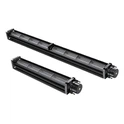
As buyers acquire Cross flow fans, they should consider the power requirements. On average, these fans have power ratings ranging from a few watts to several hundred watts. The power ratings influence the fan’s speed range, size, airflow capacity, and application requirements.
Smaller tangential blower fans in small commercial and residential applications have an average power rating of about 5 to 100 watts. The larger EC cross flow fans or AC Capacitor motor cross flow fans applied in commercial and industrial settings have power ratings of about 50 to 500 watts. Buyers should select the appropriate power to ensure optimal performance and avoid under utilization and overloading of the fan.
2. Motor size
Cross flow fans' motor size depends on airflow requirements and space limitations. On average, smaller dc cross flow fans have a motor size range of approximately 50 mm to 72 mm in diameter. They are used in smaller ventilation applications and HVAC systems. Sucha as floor heating application , microwave oven,firplace,Electronics Cooling,Automotive Industry,Medical Equipment,Lighting Systems,Appliances,etc.
Larger ECM cross flow fans with a motor size range of about 92 mm to 138 mm are used for larger commercial and industrial environments.Such as Data Centers, HVAC Systems,Industrial Machinery,Energy Storage Systems,Commercial Refrigeration,Air curtain ,etc .

Buyers should consult the manufacturers for the correct specifications and guidelines on the appropriate motor size for their desired airflow needs.
3. Cost
Buyers should consider the cost of the ECM fans based on their features, energy efficiency, and long-term savings. Light commercial and smaller residential ECM fans tend to cost cost around USD 20 to USD 50.
Larger industrial and commercial ECM fans cost between USD 50 and USD 300. Generally, high-quality ECM cross flow fans have higher upfront costs but offer substantial energy savings and durability. Buyers must conduct a cost-benefit analysis to determine the appropriate investment value, including energy efficiency, maintenance costs, and estimated service life.
4. Compatibility
The selected ECM fan should be compatible with the existing system or intended application. Factors like voltage requirements, physical dimensions, and control interfaces should be considered.
Buyers should verify that the ECM fan they prefer can seamlessly integrate into their systems without needing extensive modifications and additional components. Generally, compatibility allows for smooth installation and improves performance.
5. Efficiency
Efficiency is a significant benefit of DC24V 48V 310V cross flow fans ( copmpare with tronditional AC cross flow fans ) . Buyers should assess the fan’s energy efficiency ratings as metrics like the Airflow Efficiency Ratio indicate. Also, the fan’s power consumption compared to its airflow output shows its efficiency.
The AFER rating for ECM fans averages 2 and 4 or higher. Higher efficiency results in reduced energy consumption and lesser operating costs. As such, buyers should seek ECM fans with high AFER values to meet the efficiency standards and certifications.
6. Durability
The reliability and durability of fans should be evaluated carefully. This is based on construction quality, materials, and other features. On average, a fully functional EC/DC cross flow fan has a service life of between 5 and 7 years ( around 40000 hours ) .
As such, buyers should look for fans with features like sealed Ball bearings, corrosion-resistant coatings, and thermal protection mechanisms. These factors ensure longevity and reliable operations in demanding settings.
7. Speed
The dc and ECM motor cross flow fans have a variable speed control feature that alters the fans’ speed depending on the cooling or heating requirements. The smaller residential and commercial Tangential fans have an average speed range of about 1,000 RPM to 2,600 RPM. Additionally, the average speed of larger commercial and industrial EMC fans ranges from 500 RPM to 2,100 RPM.
The speed range and the fan’s ability to change smoothly between speeds should be considered. Buyers should acquire fans that offer a wide speed range with precise speed control that match the specific application's needs.
8. Application cases and successful experiences
Buyers can make informed decisions based on their specific applications when they understand how ECM fans have been utilized successfully. They have beforehand information on overall fan performance, energy savings, and satisfaction.
Mainly applications of Cross flow fans include but not only include :
- Heating convectors
- Fireplaces
- Server Cooling system
- Car electronics
- Medcial equipments
- Air purifier / Air curtain
- Refrigerator


Summary
Selecting the right cross flow fan requires careful consideration of airflow requirements, noise levels, power efficiency, space constraints, and control options. Cross flow fans offer a technologically advanced and sustainable solution to a client’s HVACR applications needs. This guide has highlighted the essential factors that retailers should consider to ensure they are sourcing the right cross flow fans for their target market. To explore a range of listings of tangential fans and their key components, and to learn more about sourcing trends ,cross flow fan technology and tips, visit longwellfans.com.