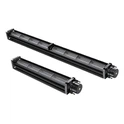
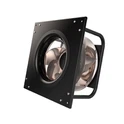
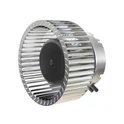
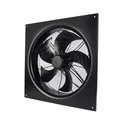
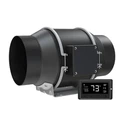
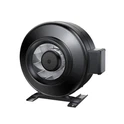
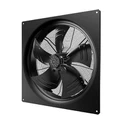
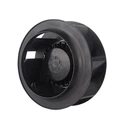
When the impeller rotates, the gas enters the impeller axially from the air inlet, is pushed by the blades on the impeller to increase the energy of the gas, and then flows into the guide vanes. The guide vane changes the deflected airflow into an axial flow, and at the same time introduces the gas into the diffuser tube, further converts the kinetic energy of the gas into pressure energy, and finally introduces it into the working pipeline.
The blades of an axial flow fan work similarly to the wings of an airplane. However, the latter applies lift upwards on the wings and supports the weight of the aircraft, while the axial flow fan fixes the position and moves the air.
The cross section of an axial fan is generally a wing section. The blade can be fixed in position, or it can rotate around its longitudinal axis. The angle between the blades and the airflow or the distance between the blades may not be adjustable or adjustable. Changing the blade angle or pitch is one of the main advantages of axial fans. A small blade pitch angle produces a lower flow rate, while increasing the pitch can produce a higher flow rate.
Advanced axial flow fans can change the blade pitch while the fan is running (this is quite similar to a helicopter rotor), thereby changing the flow accordingly. This is called adjustable moving blade (VP) axial fan.