Centrifugal fans play a crucial role in various applications such as ventilation, firefighting, dust removal, and smoke exhaust. When it comes to choosing the right fan for your needs, understanding the differences between forward-curved and backward-curved blade designs is essential for optimal performance and efficiency.
Forward-Curved Centrifugal Fans:
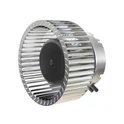
Manufactured using high-quality steel plates, forward-curved centrifugal fans offer several advantages. They are cost-effective, operate at low speeds, and can utilize smaller shafts and bearings. However, their performance curve may run parallel to the resistance curve of the pipe network, potentially leading to system overload due to decreased static pressure. Additionally, their lower blade structure strength restricts them from operating at higher speeds.

Backward-Curved Centrifugal Fans:
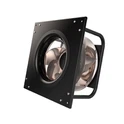
Cast in design, backward-curved centrifugal fans boast high efficiency and a power curve without overload. Their power curve typically peaks within the commonly used range, minimizing the risk of overload. With stronger blade and impeller structures, they can handle higher static pressure systems while offering low noise, high airflow, and a broad efficient range. However, they require thicker shafts, larger bearings, and stricter balance requirements due to their higher impeller speeds.

Comparison of Efficiency, Noise, Power Consumption, and Body Size:
1. Efficiency:
Backward-curved blade fans are more efficient than forward-curved blade fans due to lower energy losses during airflow conversion.
2. Power Consumption:
Backward-curved blade fans require less shaft power and consume less electrical energy compared to forward-curved blade fans, thanks to their higher efficiency.
3. Noise:
Forward-curved blade fans produce more noise than backward-curved blade fans due to higher collision speeds between airflow and casing.
4. Body Size:
Forward-curved blade fans have smaller bodies compared to backward-curved blade fans due to their lower product of flow and pressure coefficients.
By understanding the nuances between forward-curved and backward-curved centrifugal fans, you can make informed decisions to optimize your system's performance while minimizing energy consumption and noise levels.