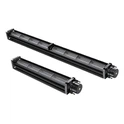
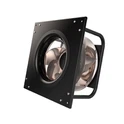
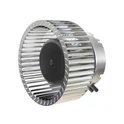
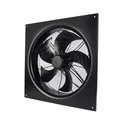
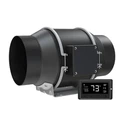
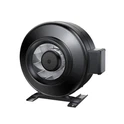
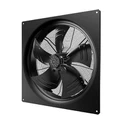
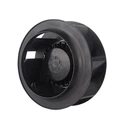
Gas blowers are devices used to transport gas (such as natural gas, biogas, etc.). They are typically designed to transport gas from one location to another, such as from a gas tank or storage facility to gas appliances such as gas water heaters, gas boilers, and gas stoves.
The working principle of a gas blower is as follows: the gas burns in the combustion chamber to produce hot, high-pressure gas. The gas then drives the piston or turbine, which in turn drives the fan. When the fan rotates, air is drawn in from the inlet, accelerated by the impeller, and flows outward. After passing through the diffuser, the kinetic energy is converted into static pressure, resulting in a high-pressure airflow.
These blowers are typically designed to ensure that the gas maintains a certain pressure and flow rate during transportation, to ensure that the gas appliances can operate normally and provide the required gas supply. Gas blowers play an important role in gas transportation systems, ensuring that gas can be safely and effectively transported to the desired location for use.
Gas blowers have the following characteristics: simple structure, small size, light weight, high efficiency, and low noise. They are widely used in industrial production, agricultural production, and environmental protection.

Gas blowers can be classified into the following types according to their structure:
Piston gas blowers: Piston gas blowers are composed of a piston, cylinder, crankshaft, and connecting rod. After the gas burns in the combustion chamber, the pressure generated drives the piston to move up and down, which in turn drives the crankshaft to rotate, and the crankshaft then drives the fan to rotate. Piston gas blowers have a simple structure, small size, light weight, and high efficiency. They are suitable for low-pressure, high-flow applications.
Turbine gas blowers: Turbine gas blowers are composed of an impeller, casing, and combustion chamber. After the gas burns in the combustion chamber, the pressure generated drives the turbine to rotate, which in turn drives the fan to rotate. Turbine gas blowers have a compact structure, small size, light weight, and high efficiency. They are suitable for medium-pressure, medium-flow applications.
Centrifugal gas blowers: Centrifugal gas blowers are composed of an impeller, casing, and combustion chamber. After the gas burns in the combustion chamber, the pressure generated drives the impeller to rotate, which in turn drives the fan to rotate. Centrifugal gas blowers have a simple structure, small size, light weight, and high efficiency. They are suitable for high-pressure, low-flow applications.
Gas blowers can also be classified according to the type of gas used:
Natural gas gas blowers: Natural gas gas blowers use natural gas as fuel, which has the characteristics of stable combustion and no pollution.
Liquefied petroleum gas gas blowers: Liquefied petroleum gas gas blowers use liquefied petroleum gas as fuel, which has the characteristics of convenient combustion and easy storage and transportation.
Biogas gas blowers: Biogas gas blowers use biogas as fuel, which has the characteristics of clean combustion and no pollution.
The application fields of gas blowers are very wide, mainly including:
Industrial production: Gas blowers are used in industrial production for ventilation, exhaust, transportation, and pressure boosting, such as industrial furnaces, boilers, burners, heat treatment equipment, and compressors.
Agricultural production: Gas blowers are used in agricultural production for drying, baking, irrigation, and fertilization, such as dryers, ovens, sprayers, and fertilizer spreaders.
Environmental protection: Gas blowers are used in environmental protection for pollutant treatment, waste gas discharge, and waste disposal, such as sewage treatment plants, waste incineration plants, and waste gas purification equipment.
Gas blowers are indispensable equipment in industrial production, agricultural production, and environmental protection. Their performance and quality directly affect production efficiency and environmental protection effects. When selecting a gas blower, it is important to choose the right type and size according to the specific application and needs.