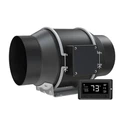
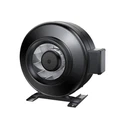
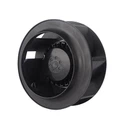
When designing centrifugal fans, it is necessary to consider the body structure, volume flow rate, temperature and density of the working medium, and sometimes special requirements. Therefore, we should first understand the general design requirements of centrifugal fans in order to carry out reasonable design and avoid mistakes.
The requirements for the design of centrifugal fans are generally: the working point that meets the required flow and pressure should be near the efficiency point; The efficiency value should be as large as possible, and the efficiency curve should be flat; The stable working interval of the pressure curve should be wide; The fan has simple structure and good technology; Easy selection of materials and accessories; Have enough strength, stiffness, safe and reliable work; Stable operation, low noise; Good adjustment performance, strong working adaptability; Fan size as small as possible, light weight; Easy to operate and maintain, easy to disassemble and transport.
In fact, it is generally impossible to meet all the above requirements at the same time, for example, there is often a contradiction between aerodynamic performance and structure (strength, process). The way to solve the contradiction is to grasp the main contradiction and coordinate the solution, which requires the designer to choose a reasonable design scheme. The use of centrifugal fans is different, the requirements are not the same, such as the centrifugal fans used in public buildings are generally used for ventilation, the general important requirement is low noise, multi-wing centrifugal fans have this feature; The centrifugal fan requiring large flow rate is usually double-suction type; For some high-pressure centrifugal fans, the specific speed is low, and the relative proportion of leakage loss is generally large.
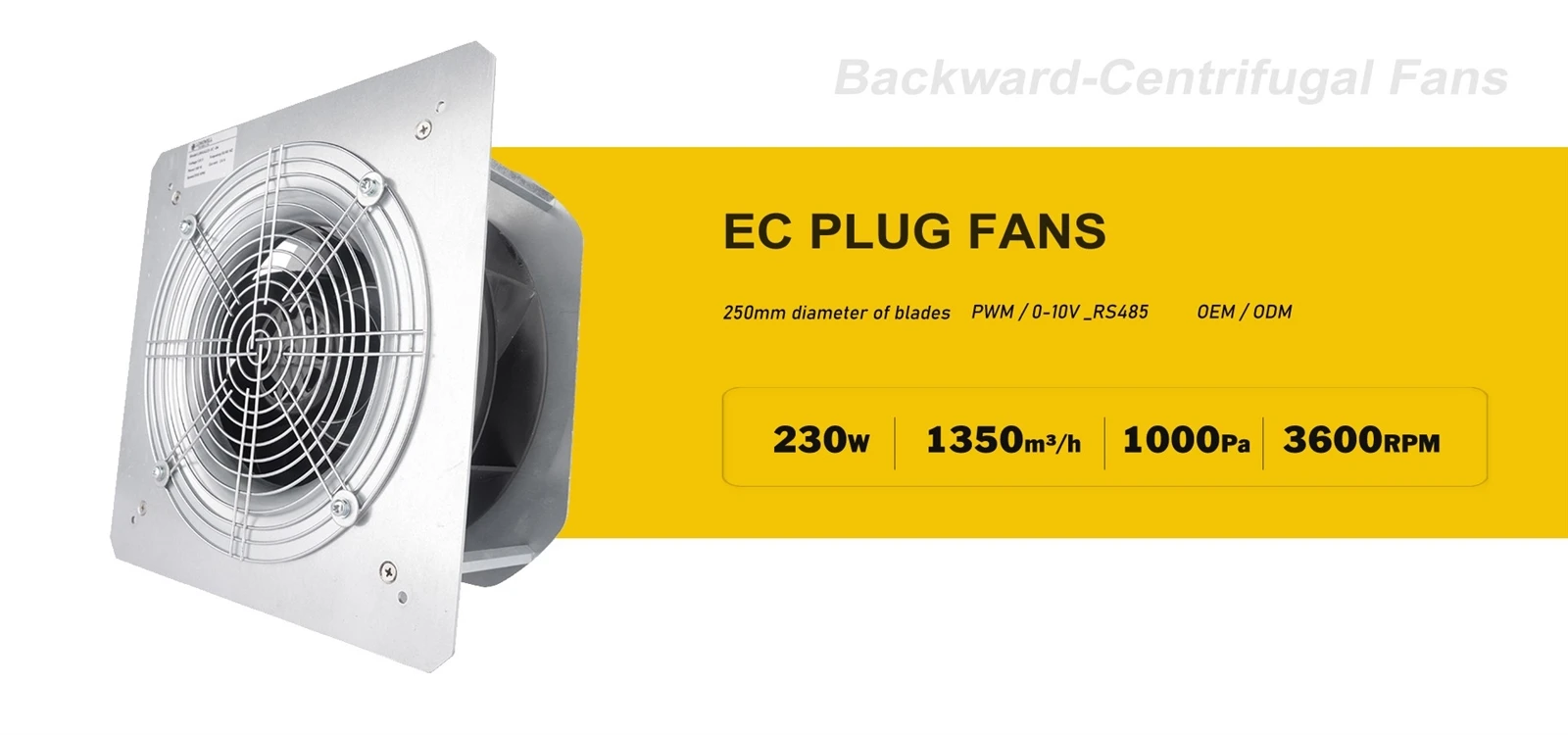
Centrifugal fan in the design should pay attention to the following points:
(1) The selection of the blade outlet Angle: the blade outlet Angle is one of the main geometric parameters to be selected first when designing. In order to facilitate the application, the blades are usually classified into: strong back curved blade, back curved arc blade, back curved straight blade and back curved airfoil blade. Radial outlet blade, radial straight blade.
(2) Reasonable choice of blade type: common fan at a certain speed, the pressure coefficient of the backward impeller is small, the impeller diameter is larger, and its efficiency is higher; The reverse is true for the forward impeller.
(3) The choice of volute size: the volute size should be as small as possible. For high specific revolution fans, a shortened spiral shape can be used, and for low specific revolution fans, a standard spiral shape is generally selected. Sometimes in order to reduce the size of the volute, the volute outlet speed is greater than the fan inlet speed, and the outlet diffuser is used to increase its static pressure value.
(4) The choice of the number of blades: In centrifugal fans, increasing the number of blades of the impeller can increase the theoretical pressure of the impeller, because it can reduce the influence of the relative eddy current. However, the increase in the number of blades will increase the friction loss of the impeller channel, which will reduce the actual pressure of the fan and increase the energy consumption. Therefore, for each type of impeller, there is a number of blades. The exact number of blades is sometimes determined according to the experience of the designer.
(5) Selection of the total pressure coefficient: When designing the centrifugal fan, the actual pressure is always given in advance. In this case, you need to select the total pressure coefficient.
(6)Determine the main geometric size of the inlet and outlet of the centrifugal impeller: the impeller is the component of the energy transferred by the fan to the gas, so its design has a great impact on the fan; Whether the main structure of the impeller can be correctly determined plays a key role in the performance parameters of the centrifugal fan. It includes the key technology of centrifugal fan design - blade design. The key link of blade design is how to determine the exit Angle of the blade.