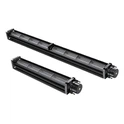
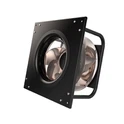
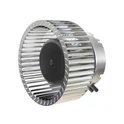
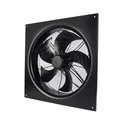
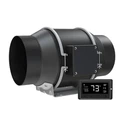
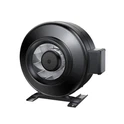
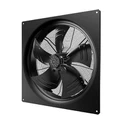
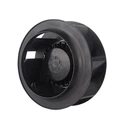
Centrifugal fans are high-performance and widely used devices, currently extensively employed in indoor ventilation, air exchange, cooling, and dust removal in major factories, mines, underground spaces, malls, and large buildings. But do you truly understand the centrifugal fan equipment you are using?
|
|
|
|


The application of centrifugal fans extends beyond just ventilation, dust extraction, and cooling. They are utilized for ventilating and inducing air in boilers, industrial furnaces, and even in air conditioning units, household appliances for cooling and ventilation, as well as drying grains, wind tunnel air sources, and inflating and propelling air cushion boats, among other fields.
In terms of structure, centrifugal fans typically feature an outer protective casing around the impeller. During operation, the power equipment drives the impeller to rotate, drawing air in through the inlet. As the blades rotate, they generate power, increasing the pressure and velocity of the gas, ultimately expelling it through the outlet under the influence of centrifugal force.
|
|
|
|


However, in industrial settings where centrifugal fans are used, due to the complex working environments and prolonged usage requirements, it's crucial to take preventive measures against corrosion in advance. During selection, appropriate models must be chosen based on different materials and separation requirements. After determining the model and key parameters, selecting suitable materials for strength components is vital, considering factors such as corrosion resistance in different environments, physical and chemical characteristics, and cost-effectiveness to ensure the safety concerning the target materials.
Another effective measure is to enhance the corrosion resistance of centrifugal fan equipment through structural design. A well-designed plan not only prolongs equipment lifespan but also enhances equipment safety and stability.