What are Cross-flow Fans and Axial Fans:
Comparative Analysis of Working Principles, Structural Design, Performance, and Applications
Cross-flow fans and axial fans belong to the category of air power equipment. While they share several similarities in their operational principles and functionalities, they also possess distinctive differences, making them suitable for specific application environments. This article presents an in-depth comparison of their designs, performances, and applicability, guiding you to select the fan most suitable for your needs.

Working Principles
Airflow Paths:
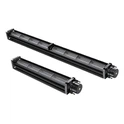
Cross-flow Fans: Airflow in a cross-flow fan follows a unique trajectory compared to an axial fan. After entering axially, the air revolves around the impeller twice in a helical path, akin to rotating on a spiral staircase, before being expelled axially in the same direction. This design facilitates the generation of higher pressure even with moderate airflow, making cross-flow fans an ideal choice for scenarios requiring concentrated air distribution.

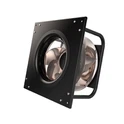
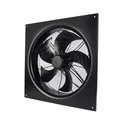
Axial Fans: Unlike the twisted path of cross-flow fans, air in an axial fan moves along a straightforward path, parallel to the rotating axis of the impeller blades. This direct approach enables higher airflow rates, effectively managing air circulation over large areas. However, axial fans generally exhibit slightly lower pressure rise compared to cross-flow counterparts.

Impeller Designs:
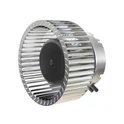
Cross-flow Fans: The core of a cross-flow fan lies in its impeller, comprising blades crafted with aerodynamic profiles arranged meticulously within a cylindrical or scroll-like housing. This design enhances the fan's compact size and enables low-noise operation, making it suitable for environments with restricted space where silent air movement is crucial.

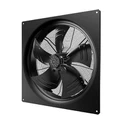
Axial Fans: In contrast, the impeller of an axial fan resembles a propeller, utilizing blades with various profiles (wing shape, aerodynamic wing) mounted on a central axis. The specific design of these blades significantly influences the fan's performance characteristics, affecting factors like efficiency, noise level, and airflow velocity.

Performance Characteristics:
Here's a comparative analysis of key performance characteristics:
|
Feature |
Cross Flow Fan |
Axial Fan |
|
Airflow |
Moderate |
High |
|
Pressure Rise |
High |
Moderate |
|
Noise |
Low |
Moderate to High |
|
Size |
Compact |
Larger |
|
Efficiency |
Limited |
High |
Applications:
Cross-flow Fans: Suitable for environments with high-pressure requirements, limited space, and low noise restrictions.
- Cooling: Electronic devices, heat sinks
- Ventilation: Kitchens, bathrooms, small rooms
- Heating: Air heaters, furnaces
- Air Handling Units: HVAC systems (Air Handling Units in HVAC systems)

Axial Fans: Ideal for environments requiring high airflow rates, extensive coverage, and relatively flexible noise restrictions.
- Industrial Ventilation: Factories, warehouses, workshops
- Dust Collection: Industrial processes, woodworking shops
- Fume Exhaust: Welding booths, laboratories
- Air Conditioning: Large buildings, commercial spaces
- Drying Systems: Industrial processes, agriculture
- Tunnels: Ventilation and smoke control

Cost and Maintenance:
The cost of both fan types varies depending on specific models, sizes, and features. Generally, cross-flow fans are more expensive due to their complex design and require regular cleaning of the impeller blades for optimal performance. Axial fans are typically cheaper than cross-flow options but might have different maintenance requirements based on their specific type and operational environment.
Selecting the Suitable Fan:
- To choose the best fan, consider the requirements of your specific application:
- Required Airflow Rate: How much air needs to be handled in your specific application? Different applications require varying airflow rates, so it's crucial to determine your specific numerical value.
- Pressure Rise Requirements: This refers to the amount of pressure the fan needs to generate to overcome system resistance. Some environments necessitate higher pressure, while others require less.
- Noise Level Limitations: For certain environments, quiet operation is crucial. Therefore, consider whether the noise generated during fan operation meets the environmental requirements.
- Space Constraints: You may have limitations in installing fans due to space constraints. Ensure that the selected fan's size and shape align with the available space.
- Budget: Finally, your budget is a critical factor. This encompasses not only the fan's purchasing cost but also subsequent maintenance expenses. Understanding your available budget range is essential in choosing the best fan.
In conclusion, to select the most suitable fan for your application, consider these factors and make an appropriate choice based on specific requirements, constraints, and budget considerations.
We hope this content helps you understand the characteristics of cross-flow and axial fans and assists in making informed decisions for specific applications, optimizing performance and cost-effectiveness.
NINBO LONGWELL is a leading enterprise focusing on the wind energy industry, committed to creating healthier, more comfortable, and environmentally friendly living environments. If you have any further questions or needs, please feel free to contact us. We are ready to provide you with free and professional solutions at any time.