Hey there! As a supplier of Cross Flow Fans, I often get asked about how the impeller of a cross flow fan works. So, I thought I'd take a moment to break it down for you in a way that's easy to understand.
First off, let's talk about what a cross flow fan is. You might have seen these fans in various applications, like air conditioners, refrigerators, and even some small electronic devices. They're known for their ability to produce a wide, uniform airflow, which makes them super useful in a lot of different situations.
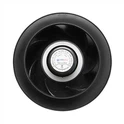
Now, the heart of a cross flow fan is its impeller. The impeller is basically a series of blades arranged in a circular pattern. These blades are what make the magic happen and create the airflow.
The Basics of Impeller Operation
When the motor of the cross flow fan starts up, it spins the impeller at a high speed. As the impeller rotates, the blades slice through the air. The shape and design of the blades are crucial here. They're typically curved in a specific way to maximize the efficiency of air intake and output.
As the blades move through the air, they create a low - pressure area on one side and a high - pressure area on the other. Air naturally flows from an area of high pressure to an area of low pressure. So, air is drawn into the fan on the low - pressure side and then pushed out on the high - pressure side.
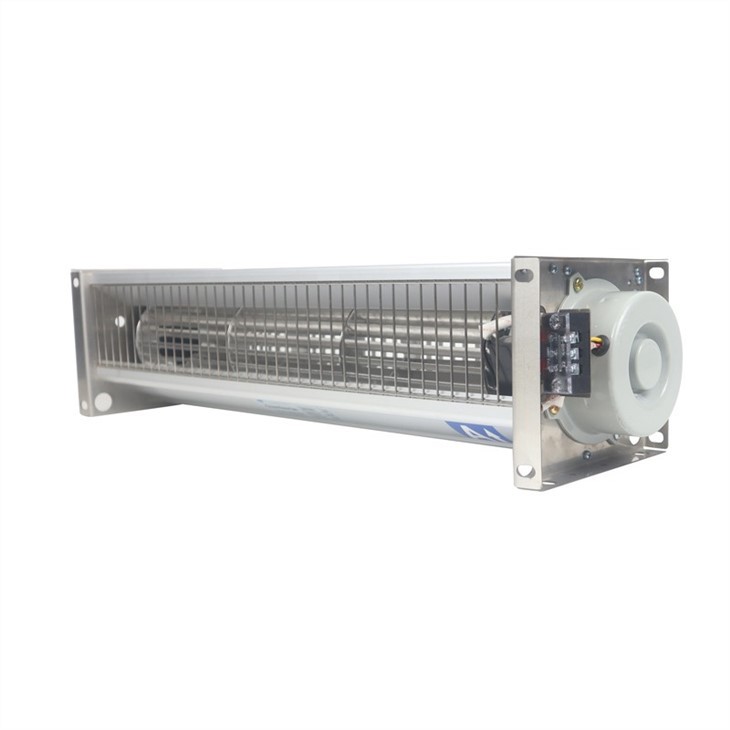
One of the unique features of a cross flow fan's impeller is that the air flows across the impeller's axis. Unlike some other types of fans where the air flows parallel to the axis of rotation, in a cross flow fan, the air enters the fan from one side, passes through the impeller, and exits on the other side, perpendicular to the impeller's axis.
The Role of Blade Design
The design of the impeller blades has a huge impact on the performance of the cross flow fan. There are a few key factors in blade design:

-
Blade Shape: The blades are usually curved to create a smooth flow of air. A well - designed curve helps to reduce turbulence and increase the efficiency of the fan. For example, a backward - curved blade design can help to minimize the power consumption of the fan while still maintaining a good airflow rate.
-
Blade Angle: The angle at which the blades are set also matters. If the blades are set at too steep an angle, the fan might consume more power and create a lot of noise. On the other hand, if the angle is too shallow, the airflow might be weak. Manufacturers spend a lot of time optimizing the blade angle to get the best balance between airflow, power consumption, and noise.
-
Blade Pitch: The pitch of the blades, which is the distance between adjacent blades, affects the amount of air that can be moved by the fan. A smaller pitch generally means more blades, which can increase the airflow rate but might also increase the power consumption and noise level.
Airflow Patterns and Efficiency
The impeller of a cross flow fan creates a complex airflow pattern. When the air enters the fan, it first gets caught up in the rotating blades. As the blades spin, they accelerate the air and direct it towards the outlet.
One of the advantages of a cross flow fan is its ability to produce a relatively uniform airflow over a wide area. This is because the air is spread out as it passes through the impeller. The wide and uniform airflow makes cross flow fans ideal for applications where you need to cool or ventilate a large surface area.
In terms of efficiency, the design of the impeller plays a big role. A well - designed impeller can convert a higher percentage of the electrical energy input into useful airflow. This means that the fan can move more air with less power, which is not only good for the environment but also for your electricity bill.
Different Types of Cross Flow Fans and Their Impellers
We offer a variety of cross flow fans, each with its own unique impeller design to suit different applications.
-
DC Cross Flow Fan: These fans are powered by direct current and are often used in applications where precise control of the fan speed is required. The impellers in DC cross flow fans are designed to work efficiently at different speeds. You can check out our DC Cross Flow Fan for more details.
-
Elevator Cross Flow Fan: Elevators need reliable ventilation systems to keep the air fresh inside. Our Elevator Cross Flow Fan has an impeller designed to operate quietly and efficiently in a confined space. The blades are optimized to create a sufficient airflow to remove stale air and maintain a comfortable environment.
-
AC Cross Flow Fan: Powered by alternating current, AC cross flow fans are commonly used in larger - scale applications. The impellers in these fans are designed to handle higher volumes of air. You can find out more about our AC Cross Flow Fan on our website.
Why Choose Our Cross Flow Fans
As a supplier, we take pride in our cross flow fans. Our impellers are carefully designed and manufactured using high - quality materials. We use advanced engineering techniques to optimize the blade design for maximum efficiency, low noise, and long - term reliability.
Whether you're looking for a fan for a small electronic device or a large industrial application, we have the right cross flow fan for you. Our team of experts is always ready to help you choose the best fan for your specific needs.
If you're in the market for a cross flow fan, I encourage you to reach out to us for a procurement discussion. We can provide you with detailed product information, technical specifications, and competitive pricing. Let's work together to find the perfect cross flow fan solution for your project.
References
- "Fan Engineering: The Application of Air Moving Equipment" by the Buffalo Forge Company.
- Various research papers on fan design and aerodynamics from academic journals.