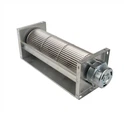
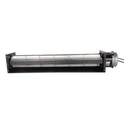
Hey there! As a supplier of Motor Fan Blades, I often get asked about the differences between forward - curved and backward - curved motor fan blades. So, let's dive right in and break it down in a way that's easy to understand.
Basics of Motor Fan Blades
First off, motor fan blades are crucial components in many systems, especially in things like Motor Fan Blade. They play a key role in moving air, which is essential for cooling, ventilation, and even in some industrial processes. There are different types of fan blades, but today we're focusing on the forward - curved and backward - curved ones.
Forward - Curved Fan Blades
Forward - curved fan blades are designed with the blade tips curving in the direction of the fan's rotation. These blades are pretty common in low - pressure, high - volume applications.
Performance
One of the main advantages of forward - curved fan blades is their ability to move a large amount of air at relatively low speeds. This makes them ideal for applications where you need to circulate a lot of air without generating too much noise. For example, in small air - handling units or household ventilation systems, forward - curved blades can do the job quietly and efficiently.
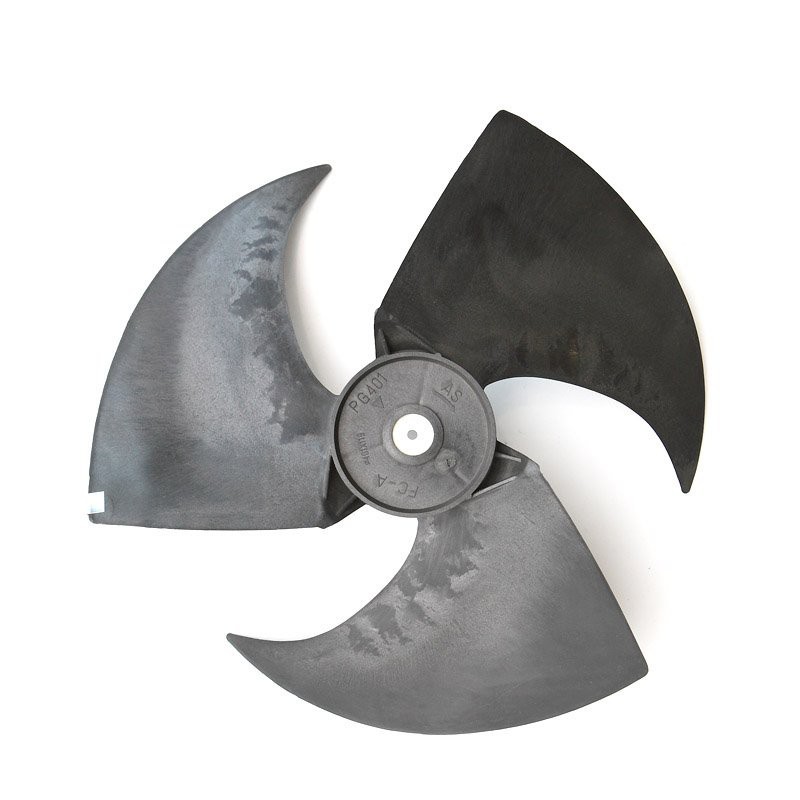

However, they aren't the best when it comes to high - pressure applications. Since they operate at lower speeds, they struggle to generate the pressure needed to push air through long ducts or against significant resistance.
Efficiency
In terms of efficiency, forward - curved fan blades are generally less efficient compared to backward - curved ones. They tend to consume more energy to move the same amount of air. This is because the design of the blades causes more turbulence and air recirculation within the fan housing, which wastes energy.
Construction
Forward - curved blades are often made of lightweight materials like plastic. Plastic Fan Impeller are a popular choice for forward - curved designs because they are inexpensive to manufacture and easy to mold into the right shape.
Backward - Curved Fan Blades
Backward - curved fan blades, as the name suggests, have the blade tips curving against the direction of the fan's rotation. These blades are typically used in high - pressure, high - efficiency applications.
Performance
Backward - curved fan blades are great at generating high pressures. They can push air through long ducts, filters, and other obstructions with ease. This makes them a top choice for industrial ventilation systems, large air - conditioning units, and even some automotive cooling systems.
They also have a wider operating range compared to forward - curved blades. They can operate efficiently at both low and high flow rates, which gives them more flexibility in different applications.
Efficiency
Backward - curved fan blades are known for their high efficiency. Their design reduces turbulence and air recirculation, which means they use less energy to move the same amount of air as forward - curved blades. This not only saves on energy costs but also reduces the environmental impact.
Construction
Backward - curved blades can be made from a variety of materials, including metal and plastic. Metal blades are often used in heavy - duty applications where durability is a must. However, plastic blades are also becoming more popular due to their lower cost and lighter weight.
Comparing the Two
Now that we've looked at the characteristics of both forward - curved and backward - curved fan blades, let's compare them side by side.
Airflow and Pressure
Forward - curved blades are better for high - volume, low - pressure applications. They can move a lot of air, but they can't generate much pressure. On the other hand, backward - curved blades are designed for high - pressure applications. They can push air against resistance, but they may not move as much air as forward - curved blades at low pressures.
Efficiency
Backward - curved blades win hands down when it comes to efficiency. They use less energy to move air, which means lower operating costs in the long run. Forward - curved blades, while cheaper to manufacture, are less efficient and may end up costing more to operate over time.
Noise
Forward - curved blades are generally quieter than backward - curved blades. Since they operate at lower speeds, they produce less noise. This makes them a good choice for applications where noise is a concern, such as in residential or office settings.
Cost
Forward - curved blades are usually cheaper to manufacture because they can be made from lightweight, inexpensive materials like plastic. Backward - curved blades, especially those made from metal, can be more expensive. However, the higher initial cost of backward - curved blades may be offset by their lower operating costs over time.
Applications in the Real World
Let's take a look at some real - world applications of these two types of fan blades.
Forward - Curved Blades
- Household Ventilation: In homes, forward - curved blades are commonly used in bathroom exhaust fans, range hoods, and small air - circulator fans. They can move air quietly and efficiently in these low - pressure applications.
- Small Air - Handling Units: In commercial buildings, small air - handling units that serve individual rooms or small areas often use forward - curved blades. These units need to circulate air without making too much noise.
Backward - Curved Blades
- Industrial Ventilation: In factories and warehouses, backward - curved blades are used in large ventilation systems. These systems need to push air through long ducts and filters, which requires high pressure.
- Large Air - Conditioning Units: In commercial and industrial air - conditioning systems, backward - curved blades are used to move air through the cooling coils and ductwork. Their high efficiency helps to reduce energy consumption.
Conclusion
So, there you have it! The main differences between forward - curved and backward - curved motor fan blades. As a supplier of Air Conditioner Fan Blades and other fan components, I know how important it is to choose the right type of blade for your application. Whether you need a high - volume, low - pressure solution or a high - pressure, high - efficiency one, we've got you covered.
If you're in the market for motor fan blades, don't hesitate to reach out for a consultation. We can help you select the best type of blade for your specific needs and provide you with a quote. Let's work together to find the perfect solution for your ventilation or cooling requirements!
References
- "Fan Engineering", Buffalo Forge Company
- "Handbook of Heating, Ventilation, and Air Conditioning", American Society of Heating, Refrigerating and Air - Conditioning Engineers (ASHRAE)