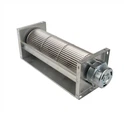
Hey there! As a supplier of DC Cross Flow Fans, I often get asked about the maximum speed of these nifty devices. So, I thought I'd sit down and write a blog post to share what I know.
First off, let's talk a bit about what a DC Cross Flow Fan is. A DC Cross Flow Fan, as the name suggests, is a type of fan that operates on direct current (DC) power. It has a unique design where the air flows through the fan in a crosswise direction. This design makes it great for a variety of applications, like in air conditioners, refrigerators, and even some elevators. You can check out more about our DC Cross Flow Fan on our website.

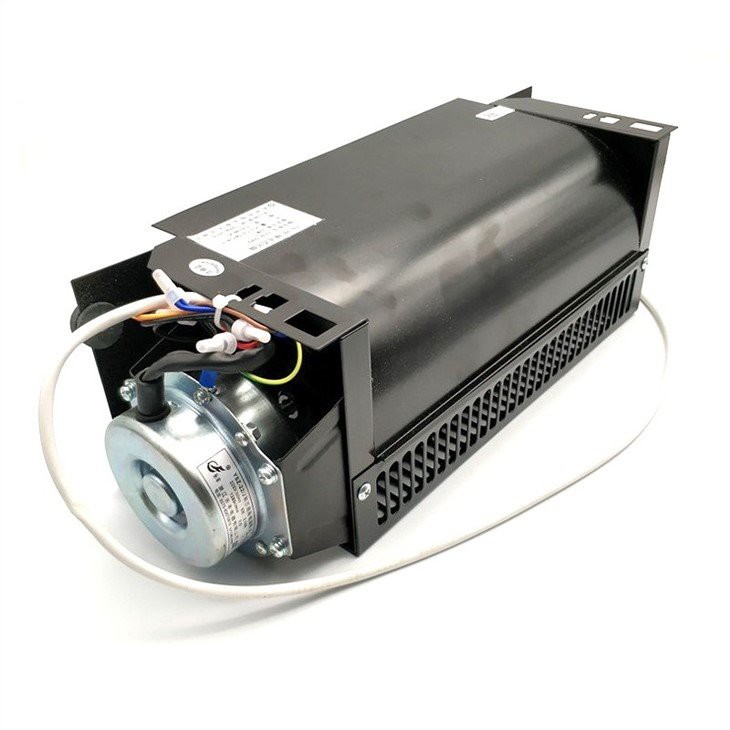
Now, onto the main question: what's the maximum speed of a DC Cross Flow Fan? Well, it's not a one - size - fits - all answer. The maximum speed of a DC Cross Flow Fan can vary depending on several factors.
Factors Affecting the Maximum Speed
1. Fan Size
The size of the fan plays a huge role. Generally, smaller fans can spin at higher speeds compared to larger ones. A smaller fan has less mass, so it requires less energy to reach high rotational speeds. For example, a tiny DC Cross Flow Fan used in a small electronic device might be able to spin at speeds of up to 5000 RPM (Revolutions Per Minute). On the other hand, a large industrial - sized DC Cross Flow Fan, like the ones used in big ventilation systems, might have a maximum speed of around 2000 RPM. This is because larger fans need more power to overcome the inertia associated with their larger blades and heavier components.
2. Motor Power
The power of the motor that drives the fan is another crucial factor. A more powerful motor can supply more torque, which allows the fan to reach higher speeds. Motors with higher wattage ratings can generally spin the fan blades faster. If you've got a high - power motor in your DC Cross Flow Fan, it can push the blades to rotate at a brisk pace. However, there's a limit. Even with a powerful motor, other factors like the fan's mechanical design and the load it's operating under can restrict the maximum achievable speed.
3. Blade Design
The shape and design of the fan blades also matter. Blades that are aerodynamically optimized can cut through the air more efficiently, enabling the fan to reach higher speeds with less resistance. For instance, fans with curved blades are often more efficient than those with straight blades. The curved design helps in creating a smoother airflow, reducing turbulence and allowing the fan to spin faster. Additionally, the number of blades can affect the speed. Fans with fewer blades might be able to spin faster as there's less air resistance and less weight to rotate.
4. Load Conditions
The load on the fan, which includes factors like the air pressure it needs to overcome and the resistance in the ventilation system, can significantly impact the maximum speed. If the fan is working in a system with high air resistance, like a long and narrow duct, it will have to work harder to move the air. This increased load can limit the fan's ability to reach its maximum speed. In contrast, a fan operating in a low - resistance environment, such as an open - air setup, can more easily achieve its top speed.
Typical Maximum Speeds in Different Applications
In Electronics
In electronic devices like laptops and small audio equipment, DC Cross Flow Fans are used for cooling purposes. These fans are usually small in size and can reach relatively high speeds. Speeds of 3000 - 5000 RPM are quite common. The high speed helps in quickly dissipating the heat generated by the electronic components, ensuring that the device stays cool and functions properly.
In HVAC Systems
Heating, Ventilation, and Air Conditioning (HVAC) systems often use DC Cross Flow Fans. In these applications, the fan size can vary from medium to large. Medium - sized fans in residential HVAC units might have a maximum speed of around 2500 RPM. Larger industrial HVAC systems, which need to move large volumes of air, might have fans with maximum speeds in the range of 1500 - 2000 RPM. These speeds are sufficient to circulate the air effectively throughout the building.
In Elevators
Elevator Cross Flow Fans are designed to provide ventilation inside the elevator car. These fans need to operate quietly while still providing adequate airflow. The maximum speeds of elevator cross - flow fans typically range from 1500 - 2500 RPM. This speed range allows for a good balance between airflow and noise level, ensuring a comfortable environment for passengers.
Comparing with AC Cross Flow Fans
It's also interesting to compare DC Cross Flow Fans with AC Cross Flow Fans. AC fans operate on alternating current, and their speed is often more closely tied to the frequency of the power supply. In most regions, the standard AC power frequency is 50 or 60 Hz, which limits the maximum speed of AC fans. DC Cross Flow Fans, on the other hand, offer more flexibility in speed control. You can adjust the voltage supplied to the DC fan to change its speed, allowing for more precise control depending on the application's requirements. This means that in some cases, DC Cross Flow Fans can achieve higher speeds than their AC counterparts, especially when fine - tuned for specific needs.
Why Knowing the Maximum Speed Matters
Understanding the maximum speed of a DC Cross Flow Fan is important for several reasons. For manufacturers, it helps in designing efficient ventilation systems. By knowing the top speed, they can calculate the maximum airflow the fan can provide and ensure that the system meets the required performance standards. For end - users, knowing the maximum speed can help in choosing the right fan for their needs. If you need a fan for a high - heat application, you'll want a fan that can reach a high speed to provide sufficient cooling.
Contact Us for Your DC Cross Flow Fan Needs
If you're in the market for a DC Cross Flow Fan, whether it's for a small electronic project or a large - scale industrial application, we've got you covered. We offer a wide range of DC Cross Flow Fans with different sizes, power ratings, and blade designs to suit your specific requirements. Our team of experts can help you select the perfect fan and provide you with all the technical support you need. So, don't hesitate to reach out to us for a consultation and start discussing your procurement needs.
References
- Fan Engineering Handbook
- Journal of Aerodynamics and Fan Technology
- Technical Documentation on DC and AC Fan Systems