Hey there! As a supplier of AC Cross Flow Fans, I often get asked about what materials go into making these nifty devices. So, I thought I'd take a deep dive and share all the details with you.
First off, let's talk about the blades. The blades are a crucial part of the AC cross flow fan as they're responsible for moving the air. One of the most commonly used materials for blades is plastic. Yeah, you heard that right! Plastic blades have a bunch of advantages. They're lightweight, which means the fan doesn't have to work as hard to spin them. This can lead to lower energy consumption and longer motor life. Plus, plastic is relatively cheap to produce, which helps keep the cost of the fan down.
There are different types of plastics used. Polypropylene (PP) is a popular choice. It's tough, resistant to chemicals, and can handle a wide range of temperatures. Another one is acrylonitrile butadiene styrene (ABS). ABS is known for its strength and impact resistance. It gives the blades a good balance of durability and flexibility, so they can withstand the constant spinning and air pressure without breaking easily.
Some high - end AC cross flow fans might use metal blades. Aluminum is a common metal for this purpose. Aluminum blades are strong and have good heat dissipation properties. If the fan is going to be used in an environment where it might get hot, like in some industrial settings, aluminum blades can help prevent overheating. They also tend to be more precise in shape, which can improve the fan's efficiency in moving air. However, aluminum blades are heavier than plastic ones, so the motor has to be more powerful to spin them.

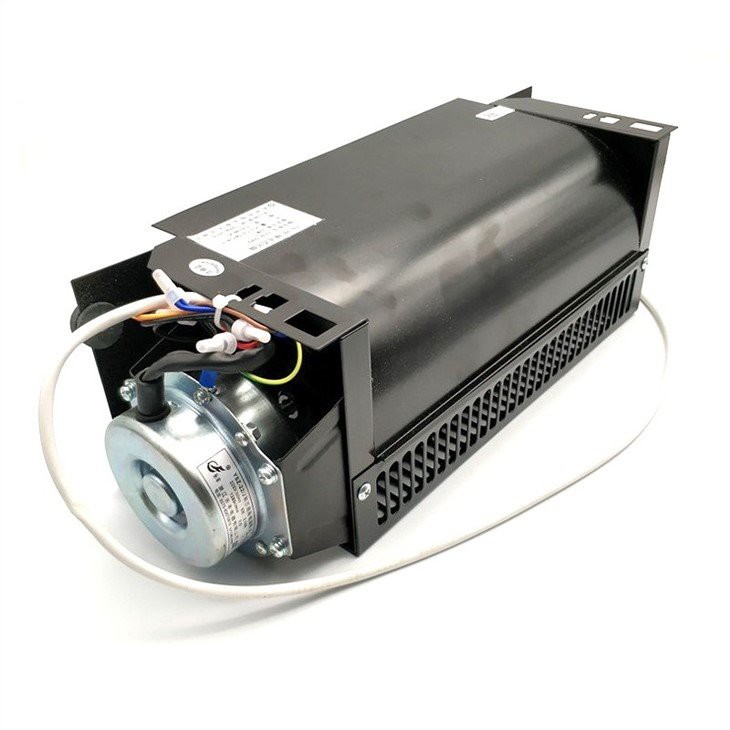
Now, let's move on to the housing. The housing of an AC cross flow fan protects the internal components and helps direct the airflow. Plastic is also a top choice for the housing. It's easy to mold into different shapes, which is great for designing fans that fit different applications. For example, if you're looking for an Elevator Cross Flow Fan, the housing can be designed to fit the tight spaces in an elevator shaft. The same goes for other specialized fans.
Fiberglass - reinforced plastic (FRP) is another option for the housing. FRP combines the strength of fiberglass with the moldability of plastic. It's very strong and can resist corrosion, making it suitable for outdoor or harsh - environment applications. Metal housings are also available, usually made of steel or stainless steel. Steel housings are extremely strong and can provide excellent protection for the fan's internal parts. Stainless steel, on the other hand, is resistant to rust and corrosion, which is ideal for areas with high humidity or where the fan might come into contact with water.
The motor is the heart of the AC cross flow fan. The motor casing is often made of metal, typically aluminum or steel. Aluminum is lightweight and has good heat - dissipating properties, which helps keep the motor cool during operation. Steel casings, as mentioned before, are strong and can protect the motor from physical damage. Inside the motor, there are copper windings. Copper is an excellent conductor of electricity, which is essential for the motor to generate the magnetic fields needed to spin the rotor.
The bearings in the fan are also important. They allow the shaft to rotate smoothly. Bearings are usually made of steel or ceramic. Steel bearings are common because they're relatively inexpensive and can handle a decent amount of load. Ceramic bearings, on the other hand, are more expensive but offer better performance. They have lower friction, which means less energy is wasted as heat, and they can last longer, especially in high - speed applications.
In addition to these main components, there are also some small parts like gaskets and seals. Gaskets are often made of rubber or silicone. Rubber gaskets are flexible and can create a tight seal to prevent air leakage. Silicone gaskets are more heat - resistant, so they're great for use near the motor or in high - temperature environments.
When it comes to choosing the right AC cross flow fan for your needs, understanding the materials used is crucial. Whether you're looking for a general - purpose AC Cross Flow Fan for your home or office, or a specialized one for an industrial application, the materials will affect the fan's performance, durability, and cost.
If you're in the market for an AC cross flow fan, or maybe you're just curious and want to learn more, don't hesitate to reach out. We're here to help you find the perfect fan for your specific requirements. Whether it's about the materials, the performance, or the price, we can have a detailed discussion and find the best solution for you.
References:
- "Fan Engineering Handbook"
- Industry research reports on cross - flow fan manufacturing
So, if you've got any questions or are interested in purchasing, just let us know. We're ready to start that conversation and help you get the right AC cross flow fan for your project. Whether it's for a small - scale setup or a large - scale industrial application, we've got you covered. Looking forward to hearing from you!