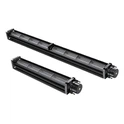
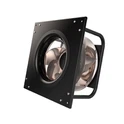
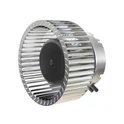
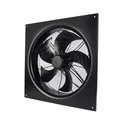
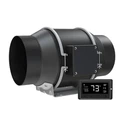
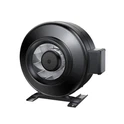
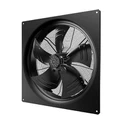
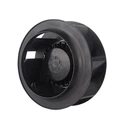
Cross flow fans, also known as tangential fans, play a crucial role in various industrial and commercial settings, serving as vital ventilation equipment. Understanding their structural features, selection guidelines, and common troubleshooting methods is essential for ensuring system stability.
I. Applications of Cross Flow Fans
1. Ventilation Systems
Cross flow fans play a pivotal role in the ventilation systems of diverse settings, including buildings, factories, and offices. They effectively facilitate air circulation, maintaining indoor air freshness by eliminating stale air and ensuring suitable temperature and humidity levels.
2. Refrigeration Systems
These fans are indispensable in refrigeration systems, circulating air to lower indoor temperatures and sustain the overall efficiency of the cooling system.
3. Air Circulation Systems
Widely used in environments like production lines, warehouses, and laboratories, cross flow fans contribute to maintaining balanced air circulation, crucial for temperature and humidity equilibrium. This is essential for meeting high air quality demands in production processes or experimental environments, ensuring smooth operations or experimental stability.
The versatility of cross flow fans allows them to cater to various air circulation needs, whether it's ensuring fresh indoor air, maintaining suitable environmental conditions, or guaranteeing efficient refrigeration system operations. This underscores their importance and necessity across different application domains.
|
|
|
|


II. Characteristics of Cross Flow Fans
1. Compact Structure, Small Size
The compact design of cross flow fans enables them to operate efficiently in limited installation spaces. Their small size makes them suitable for mounting on walls, ceilings, or other confined spaces, offering users greater installation flexibility. This design also enables their effective operation within industrial equipment or tight spaces, providing reliable ventilation solutions for confined spaces.

2. Low Noise, Minimal Vibration
Utilizing advanced shock absorption technology and optimized design, cross flow fans operate with lower noise levels and effectively suppress vibrations. This makes them suitable for noise-sensitive environments such as offices, hospitals, or places requiring quiet work environments. Reduced noise and vibration contribute to enhanced reliability and long-term stability of the fan, minimizing disruption to equipment and personnel.

3. Uniform Airflow, High Stability
Cross flow fans employ a unique airflow transmission method, ensuring uniform and stable airflow. This uniform airflow guarantees balanced air movement within the system, reducing pressure fluctuations caused by airflow. This is particularly crucial for systems requiring consistent air movement (e.g., ventilation, air conditioning), improving system efficiency and maintaining indoor air quality.
In summary, cross flow fans, with their compact structure, low noise, reduced vibration, and stable airflow, present an ideal ventilation solution for various environments, offering users efficient and stable air circulation experiences.

Ⅲ. Selection of Cross Flow Fans
1. Size
- Impeller Diameter: Directly impacts the volume of air generated by the fan. Larger impeller diameters typically produce greater airflow, suitable for scenarios requiring extensive ventilation.
- Outlet Size: Influences the area and speed of air released by the fan. Select an appropriate size based on installation space and ventilation requirements to ensure adequate air circulation.
- Impeller and overall fan length: Length generally correlates with the fan's output power and model. An appropriate length contributes to providing more stable airflow and air pressure, considering installation space and performance needs.
- Customer's overall installation space size: Consider the actual installation space, ensuring the fan's size complies with spatial requirements for proper installation and use.

2. Material
- Impeller Material (Blades): Aluminum alloy usually offers durability and high strength, suitable for applications requiring high strength. Plastic blades might be lightweight and corrosion-resistant, suitable for specific environments.
- Side Panel Material (Casing): Iron side panels provide better structural strength, enhancing the fan's stability and durability.

3. Parameters
- Speed: Directly influences the fan's airflow and air pressure. Appropriate speed can meet the ventilation needs of the system, selecting suitable speeds based on specific scenarios.
- Voltage: Choose an appropriate voltage specification based on existing power equipment and requirements, ensuring the fan operates correctly.
- Airflow and Air Pressure: Conform to the requirements of the ventilation system. Select suitable airflow and air pressure parameters according to actual scenarios to ensure ventilation effectiveness.
- Noise requirements and protection level requirements:
Based on installation environment demands for noise and protection levels, select fans that meet the necessary criteria for safety and comfort.

4. Accessories
- Speed controller: Adjusts the fan's speed and airflow, adapting to different working scenarios, enhancing the fan's flexibility and efficiency.
- Terminals, heating elements, thermal protectors, power switches, and controls:
These components enhance the fan's safety and performance, ensuring stable and safe fan operation.
|
|
|
|


5. Motor Type
- Mainstream motor classifications: Include AC/DC external/internal rotor motors, encapsulated motors, and EC internal/external rotor motors. Choose an appropriate motor type based on power, efficiency, and control requirements.
6. OEM/ODM Customization - Tooling
- Customization requirements: If there is a need to customize specific specifications or unique fan shapes, consider opting for OEM/ODM services and assess the necessity of tooling to meet custom demands.
7. In conclusion, when selecting cross-flow fans, the following recommendations can be referenced for respective environments:
|
Key Points |
Recommendation for a 20-square-meter Study Room |
Recommendation for Factory Environment |
|
Airflow and Air Pressure |
Typically advised: 200-400 cubic meters/hour airflow, 50-100 Pascal pressure, ensuring good ventilation. |
Factories usually require higher airflow and pressure. Airflow should exceed 400 cubic meters/hour, and pressure should surpass 100 Pascal, catering to large space ventilation needs. |
|
Fan Wheel Diameter and Outlet Size |
Suggested wheel length between 300mm to 400mm, ensuring a proportional outlet size for efficient airflow. |
For factories, consider a wheel diameter over 400mm, matching the outlet size for adequate ventilation. |
|
Noise Level |
A quieter cross flow fan (around 40-50 decibels) is preferable for a study room requiring a serene environment. |
Factory noise requirements are relatively lower, but choosing a low-noise centrifugal fan for worker comfort and safety is recommended. |
|
Voltage and Motor Type |
For the US, choose 110V or 120V specifications. For China, standard voltage is usually 220V. Consider AC external rotor motors for household use. |
Factories often have higher voltage supplies (e.g., 380V). Opt for centrifugal fans suitable for higher voltages, along with high-power AC external rotor motors considering factory requirements. |
|
Installation Space |
Ensure the selected fan size fits the study room without affecting furniture placement or usage. |
Ensure the selected fan size matches the factory space and layout for installation and maintenance. |
By comprehensively considering these selection criteria, choose the most suitable cross-flow fan for the corresponding environment. Ultimately, consider factors such as brand reputation, product performance, after-sales service, and compliance with national certification standards. Also, be sure to account for specific environmental layouts, production equipment, ventilation needs, and safety standards. When making selections, it's advisable to consult professional fan manufacturers or suppliers.
LONGWELL’s Fan, as a globally recognized professional fan manufacturer and trader, boasts a dedicated service team. You can contact LONGWELL Technology Co., Ltd. Just inform us of your requirements, and we can provide prompt and professional services, alleviating your concerns during the selection process. Feel free to reach out to us.

IV. Common Troubleshooting of Cross-Flow Fans
1. Motor Fault Diagnosis and Maintenance
Ensuring the normal operation of the cross-flow fan motor is crucial. Regularly check the motor's current, temperature, and vibration. If abnormalities are detected, promptly conduct repairs or replacements to ensure the motor's stable operation.
2. Inspection and Repair of Fan Blade Wear or Deformation
Fan blades are vital components of cross-flow fans, directly affecting their performance. Regularly inspect for wear or deformation of fan blades. Upon identifying issues, promptly replace damaged blades to ensure the fan's efficient operation.
3. Control System Fault Diagnosis and Maintenance
The control system is pivotal in ensuring the cross-flow fan's normal operation. Regularly inspect the system's connections and program operations. If anomalies are detected, promptly diagnose and repair to ensure the system's proper function.
V. Maintenance of Cross-Flow Fans
1. Regularly Monitor Motor Operation
Periodically monitor parameters like motor lubrication, temperature, and vibration to ensure the motor's optimal operation. Lubricate and maintain the motor when necessary to ensure its stable functioning.
2. Periodically Check Fan Blade Wear and Deformation
Regularly inspect fan blades for wear and deformation, replacing damaged blades promptly. Maintaining the fan blades in good condition is crucial for ensuring the fan's efficient performance.
3. Periodically Check Control System Operations
Regularly inspect the control system's functioning to ensure stable connections and proper program operation. Address any identified issues promptly to prevent potential faults.
Cross-flow fans, known for their compact structure, low noise, and high stability, find extensive application in various fields of ventilation systems. Through proper selection and regular maintenance, these fans can consistently function effectively, maintaining system operation. These maintenance measures are crucial for ensuring the long-term stable operation of the fans while also contributing to prolonged equipment lifespan and reduced maintenance costs.
If you have any questions, please contact us, we can provide you with free and professional answers.