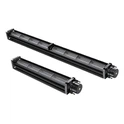
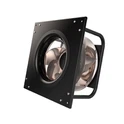
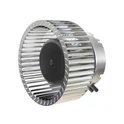
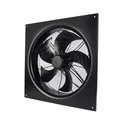
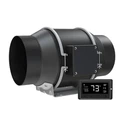
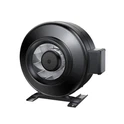
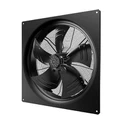
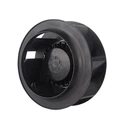
There are many types of fans, and a d is one of them. Generally, high-pressure blowers are small and easy to carry. They consist only of an impeller, which is directly connected to the motor without the need for gears or belts, ensuring high reliability and minimal maintenance requirements.
1.Working Principle:
When the impeller rotates, centrifugal force causes the gas to move forward and outward, forming a series of spiral movements. The air between the impeller blades accelerates in a spiral pattern and is pushed into the side groove outside the pump body (sucked in through the inlet). As it enters the side channel, the gas is compressed and then accelerates again between the impeller blades. As the air spirals through the impeller and side grooves, each impeller blade increases the compression and acceleration. With rotation, the gas's kinetic energy increases, further increasing the gas pressure as it passes through the side channel. When the air reaches the connection point of the side groove and the discharge flange (the side channel narrows at the outlet), the gas is squeezed out of the blades and discharged from the pump body through the outlet silencer.
2.Installation Precautions:
- Use flat washers and spring washers to tighten the screws.
- Rubber shock absorbers can be used to bear the weight of the high-pressure blower, especially for high-power blowers.
- For applications requiring noise reduction, mufflers can be added to reduce noise (typically around 5dB), with mufflers installed at the end of the inlet or outlet duct.
- In situations with strict noise requirements, adding a layer of sound-absorbing material based on the machine's conditions can meet on-site noise requirements.
- When using sound-absorbing material, pay attention to the distance between the high-pressure blower and the casing, ensure ventilation and heat dissipation, and use rubber shock absorbers to bear the blower's weight.
- Use flexible hoses to connect the inlet and outlet ducts of the high-pressure blower to isolate vibrations.
Usage Precautions:
- Regardless of the brand of the high-pressure blower, two aspects need protection: pressure and dust.
- Pressure is often protected using pressure relief valves. When the operating pressure of the high-pressure blower exceeds the set pressure of the relief valve, the relief valve automatically opens to release excess pressure and protect the blower.
- Dust is often filtered using filters with different filtration accuracies based on the usage scenario. Different filter cartridges have different maintenance methods and service lives, so it's essential to clarify these details when ordering. In special cases, special protections might be necessary, such as ensuring ventilation and heat dissipation in sealed environments. When the ambient temperature is high, proper ventilation and heat dissipation are crucial, or selecting blowers that allow higher inlet temperatures. Certain brands of high-pressure blowers might have their usage recommendations, so it's crucial to gather detailed information before making a purchase.
|
|
|
|


Maintenance:
- The blower must be operated and maintained by designated personnel.
- The blower must not operate with faults.
- Regularly clean the internal dust, especially dust and impurities on the impeller, to prevent corrosion and imbalance.
- Maintenance work must emphasize cutting off power and stopping the blower first.
- Regularly check the sensitivity of the thermometer and oil level gauge.
- Change the lubricating oil every 3 to 6 months under normal circumstances, and replace the lubricating oil after each disassembly and repair.