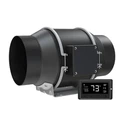
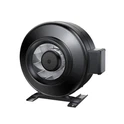
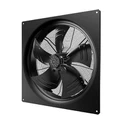
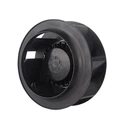
After prolonged use, the impeller of a centrifugal fan can experience wear and tear. If not addressed promptly, it can affect the normal operation of the fan and, in severe cases, cause damage to the fan. Therefore, impeller wear is not a trivial matter and should be taken seriously. What is the mechanism of impeller wear in centrifugal fans? What are the forms of wear, and what measures can be taken to prevent impeller wear?
I. Mechanism of Wear:
Wear phenomena involve many complex factors and are often the result of the comprehensive action of multiple mechanisms. Dust particles entering the impeller interact with the surface. In the inlet area of the centrifugal flow passage and throughout the axial flow passage, dust particles collide with the wall surface under the combined action of airflow entrainment and their own inertia, causing erosion wear on the material surface. This is typical erosive wear. In the outlet area of the centrifugal flow passage, dust particles have moved a considerable distance within the passage, most of them have collided with the wall surface multiple times, sliding or rolling along the pressure surface, exerting pressure on the wall surface, leading to abrasive wear of the material on the backside. The concentration of dust particles near the pressure surface intensifies the harmfulness of abrasive wear.
II. Forms of Wear:
Abrasive Wear:
Uneven contact surfaces experience wear due to relative motion and the abrasive action of solid particles dispersed at the interface. It affects the degree of impeller wear. Solid particles in the fan cause abrasive wear when they move at a certain speed relative to the surface of the components.
Adhesive Wear:
Studies show that, under similar conditions, even if the processing surface's precision level and cleanliness are improved, leading to better fit, wear does not decrease. On the contrary, due to the close interface and significant molecular adsorption, wear at the interface is exacerbated, known as adhesive wear.
Erosive Wear:
Surface abrasion caused by solid particles striking the metal surface.
Fatigue Wear:
Caused by surface fatigue stress (or temperature or impact) leading to surface cracks or flaking.
III. Measures to Prevent Wear:
Different wear forms can be addressed with various preventive measures:
Surface Treatment of Blades:
Surface treatments like carburizing, plasma welding, hard alloy coating, and ceramic tile attachment can be applied to the blade surface. These methods increase the surface hardness of the blades, enhancing their wear resistance to some extent. However, each method has its drawbacks. Carburizing is challenging; plasma welding can cause significant deformation and cracks on the blade surface with repeated welding, leading to accidents; determining the appropriate coating thickness is difficult in spray coating, and ceramic tile attachment is relatively expensive.
Surface Coating with Wear-Resistant Coatings:
This method is simple to operate and cost-effective, but the coating wears out quickly, lasting approximately 3-5 months.
Improving Blade Structure:
Modifying the blade working surface into a sawtooth shape, changing hollow blades to solid ones, or adding wear-resistant blocks to the blades can reduce impeller wear to a certain extent.
Preventative Wear-Resistant Inlet Guide Vanes:
Installing wear-resistant guide vanes at susceptible points can prevent particles from flowing backward toward the disc and root of the blades. This transforms concentrated wear into uniform wear, enhancing the impeller's wear resistance and extending the fan's lifespan.
Improving Aerodynamic Design:
Selecting a rational fan inlet shape, ensuring a small relative speed at the impeller inlet, minimizing the fan speed, and choosing appropriate impeller flow passage shapes can reduce the chances of solid particles colliding with the blades.