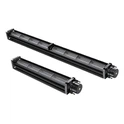
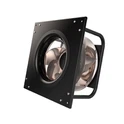
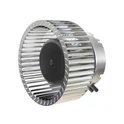
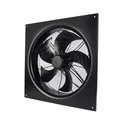
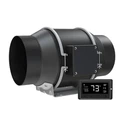
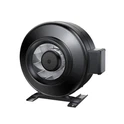
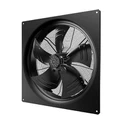
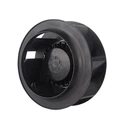
High-pressure centrifugal fans can be used for both ventilation and material or air transport of non-corrosive, non-combustible, and non-viscous substances. They have certain requirements for the medium:
Medium Temperature: Generally not exceeding 50°C, and in some cases, not exceeding 80°C.
Particle Content in the Medium: The medium should not contain dust and solid particles greater than N150mg/m³.


Working Principle:
When the impeller rotates, the centrifugal force causes the air to move outward, creating a series of spiral movements. The air between the impeller blades accelerates in a spiral manner and is pushed into the side channel (through the inlet) by the impeller blades. As it enters the side channel, the gas is compressed and then accelerated again between the impeller blades. As the air follows a spiral path through the impeller and side channel, each impeller blade further compresses and accelerates it. As the rotation continues, the kinetic energy of the gas increases, resulting in an increase in gas pressure as it reaches the connection point between the side channel and the discharge flange (the side channel narrows at the outlet). The gas is then pushed out of the impeller and discharged through the outlet silencer.
Installation Considerations:
Use flat washers and spring washers to tighten the screws.
Use rubber cushioning to support the weight of high-pressure fans, especially for high-power fans.
To reduce noise, install silencers at the end of the inlet or outlet ducts. In noise-sensitive environments, you can add an additional layer of sound-absorbing material based on the machine's conditions to meet noise requirements.
When using sound-absorbing material, pay attention to the distance between the high-pressure fan and the enclosure, ensure proper ventilation and heat dissipation, and use rubber cushioning to support the weight of the fan.
Use flexible hoses for connecting the inlet and outlet ducts of high-pressure fans to isolate vibrations.

Selection Considerations:
Understand the supplier's strength and scale, including registered capital, business scope, and whether the company has the necessary certifications.
Evaluate the supplier's background, historical performance, and legality.
Assess the product's reliability, quality assurance, and after-sales service. Check for certifications such as CE, RoSH, SGS, and others.
If there is more you would like to know, please contact us for more details