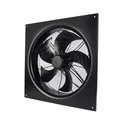
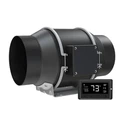
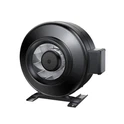
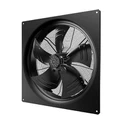
In discussions regarding the technical requirements of axial flow fans, we focus on exploring every aspect to provide a comprehensive understanding of axial flow fans. The aim is to deepen the comprehension of LONGWELL fan knowledge.
The technical requirements of axial flow fans mainly encompass the following aspects:
1. Supplier Data and Certification Requirements: Suppliers delivering fan products should provide performance and noise certification data from AMCA (Air Movement and Control Association) for reference and evaluation by users.
2. Casing and Coating Requirements: Fan casings should have hot-dip galvanizing or paint coatings with a minimum thickness of 60 micrometers. The gap between blade edges and the casing should be minimized and maintained uniformly to avoid irregular gaps.
3. Secure Fixation of Base and Brackets: The base and brackets of the fan need to be firmly fixed to ensure safe operation. The gap between the blade edges and the cylinder should be consistent.

4. Preparatory Work before Factory Dispatch: Before the fan leaves the factory, ensure that the brackets and accompanying flanges have been installed to facilitate smooth installation.
5. Blade Material and Manufacturing Process: For general-purpose fans, blades are typically made of cast aluminum alloy, while high-temperature fans use aluminum alloy. It's preferable for blade materials to be composite to ensure lightweight, antistatic, and spark-resistant performance.
6. Consistency in Blade Manufacturing Process: Employing identical molds during fan blade manufacturing ensures consistency, allowing adjustment of blade angles.
7. Blade Fixation: Blades must be securely fixed to the drive shaft to prevent loosening or detachment during fan operation.
8. Electrical Requirements and Verification: Terminal boxes should provide a minimum protection rating of IP55. Upon fan installation completion, dynamic balancing verification must be conducted according to standard procedures.
These technical requirements aim to ensure the performance, safety, and long-term stable operation of axial flow fans. A thorough understanding and adherence to these requirements will contribute to better comprehension and application of axial flow fan technology, providing deeper knowledge and guidance to professionals in related fields.