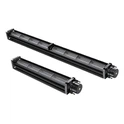
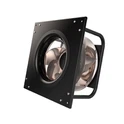
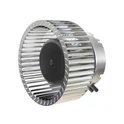
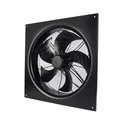
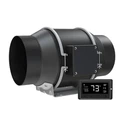
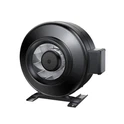
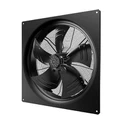
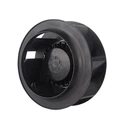
1. What is an Axial Flow Fan?
An axial flow fan is a common type of fan that operates by rotating blades to draw in air from one side of the fan and discharge it from the other side. The airflow direction of axial flow fans is parallel to the axis of the blades, is a type of fan with extremely wide application and high efficiency.
2. Structure of Axial Flow Fans


3. Classification of Axial Flow Fans
- The most common classification is based on the type of motor and includes:
· AC Axial Flow Fans: Driven by AC motors, known for their simple structure and cost-effectiveness.
· DC Axial Flow Fans: Driven by DC motors, characterized by small size, light weight, and high efficiency.
· EC Axial Flow Fans: Driven by permanent magnet motors, known for high efficiency and energy-saving.
- Axial flow fans can also be classified based on motor rotor location:
· External rotor motors: AC, DC, EC
· Internal rotor motors: AC

- Axial flow fans are further categorized based on their blowing/suction function:
· Blowing type
· Suction type

Axial Flow Fans for Air Intake are widely used in the following equipment:
1. Air Conditioning Systems: Axial flow fans for air intake are used to draw air into air conditioning systems, providing cooling or heating effects.
2. Ventilation Systems: These fans are employed to exhaust indoor polluted air, introduce fresh air, and maintain indoor air quality.
3. Industrial Production Equipment: Used to expel exhaust or harmful gases generated in industrial production, ensuring a safe and sanitary working environment.
4. Drying Equipment: Axial flow fans for air intake can accelerate the drying process by expelling moisture.
5. Agricultural Equipment: Utilized for ventilation, air circulation, and temperature control to enhance the growth environment for farm animals and crops.
6. Automotive Industry: Applied in cooling automotive engines, braking systems, and other heat sources.
7. Others: Air intake axial flow fans can also be applied in various fields, including power stations, building smoke exhaust systems, ship ventilation systems, etc.
Blowing-type Axial Flow Fans are typically used in the following equipment:
1. Industrial Air Cooling Equipment: These fans are used for cooling various industrial equipment such as boilers, power generators, and cooling towers. They expel air from the equipment, carrying away the heat emitted to maintain normal operating temperatures.
2. Ventilation Systems: Blowing-type axial flow fans can be employed in building ventilation systems to introduce fresh air into indoor spaces, expelling humid and stale air to provide a comfortable indoor environment.
3. Heating and Cooling HVAC Systems: These fans can be used in conjunction with heating and cooling HVAC systems to evenly distribute cold (warm) air to various corners of indoor spaces, improving the cooling (heating) efficiency of the HVAC system.
4. Air Curtain Machines: Blowing-type axial flow fans can be used in air curtain machines to create a high-speed airflow barrier, isolating indoor and outdoor airflows to prevent the leakage of cold (hot) air or the entry of outdoor dust.
5. Other Industrial Equipment: Blowing-type axial flow fans can also be used in other industrial equipment such as air washers and air-cooled furnaces. They play roles in cooling, drying, ventilation, etc., ensuring the normal operation of equipment.
- Axial flow fans can be constructed with different main part materials:
· Metal/cold plate (powder coating)
· Aluminum alloy

Note: Motors designed for axial flow fans can also be used for backward-curved centrifugal fans of the same specifications (AC, DC, EC centrifugal fan diagram additional guidance link).
4. Specifications Reference for Conventional Axial Flow Fans
· Diameter Range: 145~900mm
· Voltage Range: 1~220V or 3~380V, customizable to 115V
· Frequency Range: 50Hz/60Hz, additional tuning required for use with frequency converters or speed controllers, as conventional speed control may lead to increased temperature causing motor shutdown.
· Protection Level:
· External rotor motor models (72~92): IP44; (102 and above): IP54
· Internal rotor motor models: IP55
· Insulation Level: Class F
· Diameter Range: 200~450mm
· Voltage Range: DC 24V/48V/310V, speed control via 0·10V/PWM, universally applicable
· Protection Level: IP44
· Insulation Level: Class B
· Fan Diameter: 200~900mm
· Voltage Range: 72/92/102, 1~220V, 50Hz/60Hz (customizable to 115V)
138/188, 3~380V, 50Hz/60Hz (customizable to 3~208V, 1~220V)
· Speed Control: 0·10V/PWM/RS485/4·20mA, specialized EC speed controller available
· Some models have RS485 leads
· Protection Level: IP54
· Insulation Level: Class B or F
Axial Flow Fan Model Naming Reference

5.Considerations When Selecting Axial Flow Fans:
- Airflow: Consider the required airflow for the application.
- Pressure: Consider the required pressure for the application.
- Voltage: Ensure the fan voltage matches the power supply voltage (115V/230V/380V/400V).
- Frequency: Ensure the fan frequency matches the power supply frequency (50/60Hz).
- Installation: Select the appropriate installation method based on the application (vertical or horizontal).
- Usage Area: Axial flow fans are widely used in HVAC, ventilation, and cooling applications due to their efficient transport of large volumes of air. The working principle of axial flow fans makes them suitable for applications requiring high airflow and low noise.
6.Other Considerations When Selecting Axial Flow Fans:
1. Voltage, frequency, installation method, outdoor/indoor use (EC fans are treated with glue perforation for outdoor use), blowing/suction, usage area (customization required for automotive, high-speed rail projects).
2. Product specifications, photos, competitive product specifications need to be provided.
3. In case of performance not meeting requirements, generally, a larger model or higher-speed variant of the same model is chosen. If additional noise reduction is required, it can be achieved by reducing speed, resulting in lower performance; the noise value tested by us is for a single fan, and the actual noise in customer equipment will be lower.
4. Information about whether voltage can be changed is provided in the above specifications.
5. Regarding whether the grille can be changed or customized, generally, confirmation of the minimum order quantity and annual demand quantity is sufficient.
6. Regarding whether the panel size can be changed (customization requires mold development), confirmation of the minimum order quantity and annual demand quantity is sufficient.
7.Protective Measures: Same as backward curved centrifugal fans.