Which is more expensive, a centrifugal fan or an axial fan?
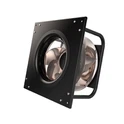
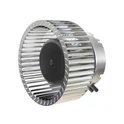
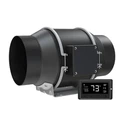
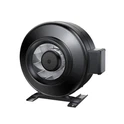
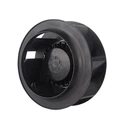
A centrifugal fan has exhaust and intake ports at 90 degrees or nearly 90 degrees, with a curved centrifugal impeller that moves air from the center outward, metaphorically described as "sucking in from the center and dispersing to the surroundings." Centrifugal fans operate at higher air pressures and are used in areas such as drying, purification, cooling, heating, and conveying.
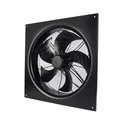
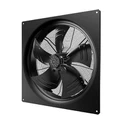
On the other hand, an axial fan has exhaust and intake ports at a 180-degree right angle or close to it, with a straight axial impeller that moves air from one end along a fixed path, increasing kinetic energy and generating a certain thrust during transmission. Axial fans are known for their high airflow and are commonly used in ventilation, air exchange, and smoke extraction applications.

Regarding pricing factors, centrifugal fans are generally more expensive than axial fans due to the following reasons:
1. Higher manufacturing complexity: Centrifugal fans have higher requirements for impeller sealing and static balance compared to axial fans, making the machining of components like frames and intake/exhaust ports more complex.
2. Higher pressure requirements: Centrifugal fans are typically used in high-pressure environments, necessitating specialized design and selection of bearings and spindles, leading to higher maintenance costs.
3. Higher rotational speeds: Centrifugal fans often operate at higher impeller speeds, requiring specially designed and manufactured drive motors, which increase costs.
4. Customization demands: Centrifugal fans come in various types with different parameters such as the number of impeller blades, frame materials, and specifications, resulting in higher customization requirements and manufacturing costs.
Selection advice for centrifugal and axial fans varies based on specific usage scenarios and requirements. For applications requiring large airflow, axial fans are recommended, while centrifugal fans are suitable for situations needing higher pressure or transporting particulate matter. It's crucial to consider airflow requirements, installation conditions, service life, and operational costs before selecting the most suitable ventilation equipment.
In conclusion, while centrifugal and axial fans differ in price, the choice should be based on specific usage scenarios and requirements to achieve optimal ventilation performance and operational cost-effectiveness.