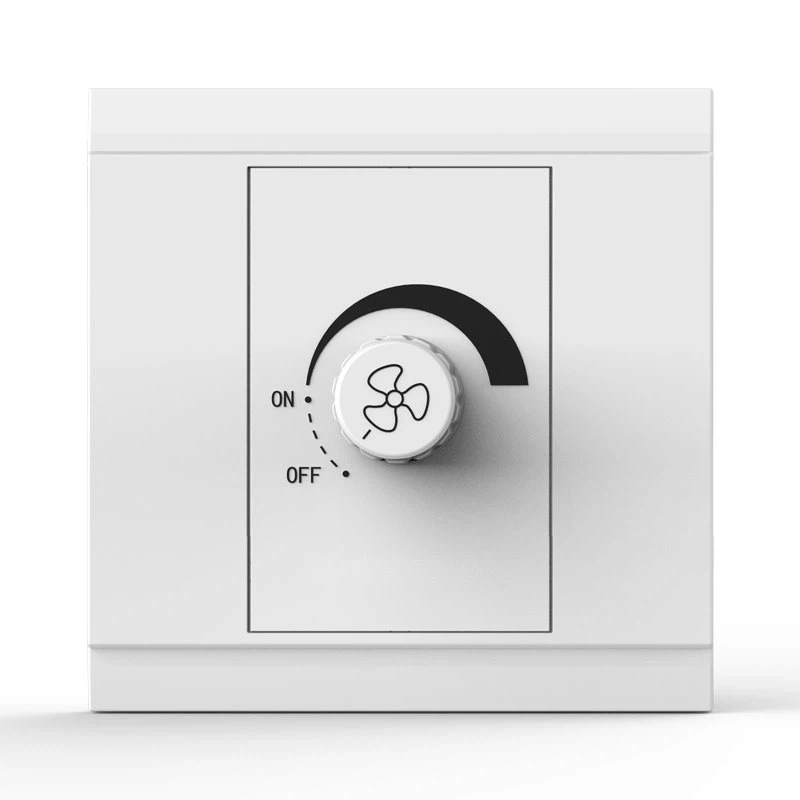
A speed regulator is a device widely used in various industrial and electrical applications to control the speed of motors or other rotating equipment. As a professional speed regulator supplier, I am often asked about the speed regulation ratio of a speed regulator. In this blog, I will explain what the speed regulation ratio is, its significance, and how it relates to the performance of speed regulators.
What is the Speed Regulation Ratio?
The speed regulation ratio is a crucial parameter that describes the ability of a speed regulator to maintain a stable speed under different load conditions. It is defined as the ratio of the difference between the no - load speed ($n_0$) and the full - load speed ($n_{FL}$) to the full - load speed. Mathematically, it can be expressed as:
[S=\frac{n_0 - n_{FL}}{n_{FL}}\times100%]
where $S$ is the speed regulation ratio, $n_0$ is the speed of the motor or equipment when there is no load applied, and $n_{FL}$ is the speed when the motor is operating at its full - load capacity.

For example, if a motor has a no - load speed of 1500 RPM and a full - load speed of 1450 RPM, the speed regulation ratio can be calculated as follows:
[S=\frac{1500 - 1450}{1450}\times100%=\frac{50}{1450}\times100%\approx3.45%]
Significance of the Speed Regulation Ratio
- Stability of Operation: A lower speed regulation ratio indicates that the speed regulator can maintain a more stable speed regardless of the load changes. In applications where precise speed control is required, such as in some manufacturing processes or in the operation of high - precision machinery, a low speed regulation ratio is essential. For instance, in a textile factory, the spinning machines need to operate at a constant speed to ensure the quality of the yarn. A speed regulator with a low speed regulation ratio can help achieve this stability.
- Energy Efficiency: When the speed regulation ratio is low, the motor operates more efficiently. Fluctuations in speed can lead to increased energy consumption as the motor may need to work harder to compensate for the speed changes. By maintaining a stable speed, the motor can operate closer to its optimal efficiency point, resulting in energy savings.
- Equipment Lifespan: Unstable speed can cause mechanical stress on the motor and other connected equipment. A speed regulator with a good speed regulation ratio can reduce this stress, thereby extending the lifespan of the equipment. For example, in a conveyor belt system, a stable speed reduces the wear and tear on the belts and the motor, reducing the frequency of maintenance and replacement.
Factors Affecting the Speed Regulation Ratio
- Type of Speed Regulator: Different types of speed regulators have different capabilities in terms of speed regulation. For example, electronic speed regulators generally offer better speed regulation ratios compared to mechanical ones. Electronic speed regulators can use advanced control algorithms to adjust the speed more precisely in response to load changes.
- Motor Characteristics: The inherent characteristics of the motor, such as its torque - speed curve, also affect the speed regulation ratio. Motors with a flat torque - speed curve tend to have better speed regulation performance. Additionally,the quality and design of the motor windings and magnetic circuits can influence how well the motor can maintain a stable speed.
- Load Variation: The nature and magnitude of the load variations also play a role. If the load changes suddenly and significantly, it can be more challenging for the speed regulator to maintain a low speed regulation ratio. In applications where the load is relatively constant, it is easier for the speed regulator to achieve a better speed regulation performance.
Our Speed Regulators and Speed Regulation Ratio
As a speed regulator supplier, we offer a wide range of speed regulators with excellent speed regulation ratios. Our products are designed using the latest technologies and high - quality components to ensure stable and precise speed control.
We understand that different customers have different requirements for speed regulation ratios. For customers in industries that demand high - precision speed control, we can provide speed regulators with extremely low speed regulation ratios. On the other hand, for applications where a moderate level of speed stability is sufficient, we have cost - effective solutions that still offer good performance.
In addition to our standard products, we also offer customized speed regulators. Our engineering team can work closely with customers to design and develop speed regulators that meet their specific needs in terms of speed regulation ratio, power rating, and other performance parameters.
Related Products
In addition to speed regulators, we also supply other related products such as Temperature Thermostat and CJX2 AC Contactor. These products can be used in conjunction with speed regulators in various HVAC and industrial applications. For example, a temperature thermostat can be used to control the temperature in an environment where the speed - regulated equipment is operating, while a CJX2 AC contactor can be used to switch the power supply to the motor in a safe and reliable manner.
How to Choose the Right Speed Regulator Based on Speed Regulation Ratio
- Understand Your Application Requirements: First, you need to determine the level of speed stability required for your application. If your application involves high - precision processes, you will need a speed regulator with a very low speed regulation ratio. For less critical applications, a moderate speed regulation ratio may be sufficient.
- Consider the Load Characteristics: Analyze the load variations in your application. If the load changes frequently and significantly, you may need a more advanced speed regulator with better dynamic response capabilities to maintain a low speed regulation ratio.
- Evaluate the Compatibility: Ensure that the speed regulator is compatible with your motor and other equipment. Consider factors such as the power rating, voltage, and control interface of the speed regulator and the motor. You can refer to our product catalog or consult our technical support team for more information on compatibility.
Contact Us for Procurement
If you are interested in our Speed Regulator products or have any questions about speed regulation ratios, please feel free to contact us. Our sales team is ready to provide you with detailed product information, technical support, and competitive quotes. We look forward to working with you to meet your speed control needs.
References
- Dorf, R. C., & Bishop, R. H. (2016). Modern Control Systems. Pearson.
- Chapman, S. J. (2012). Electric Machinery Fundamentals. McGraw - Hill Education.