Solving Noise Issues: How to Choose Quiet Axial Fans
Have you ever felt unsettled by the loud noise of axial fans? Despite their excellent ventilation performance, sometimes their sound can be as disruptive as a jet engine. But fret not, for those in need of ventilation solutions! This guide will assist you in selecting and operating axial fans for a comfortable and quiet ventilation experience.

---------------------------------------------------------------------------------------------------------------------------------
Understanding Axial Fans: What Exactly Are They?
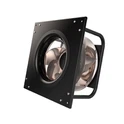
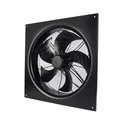
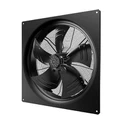
Imagine a propeller rotating inside a cylindrical duct. That's essentially the principle of an axial fan. They operate by drawing air parallel to the axis of the fan blades and then pushing it out in a straight line. They are widely used in ventilation, cooling electronic components, and various industrial applications.
Advantages of Axial Fans:
· Efficient Airflow: They excel at moving large volumes of air at high speeds.
· Compact Design: Their simple design saves space compared to other fan types.
· Cost-Effective: They are generally more affordable than other fan options.
---------------------------------------------------------------------------------------------------------------------------------
The Noise Issue with Axial Fans
However, their downside is noise. Due to the rapid movement of air and blade design, they can generate significant sound. This can be problematic in residential environments or places sensitive to noise.
Identifying the Source of Noise: Noise Issues in Axial Fans
Understanding the reasons behind noise is crucial for selecting quiet fans. Here are the main contributors:
· Blade Design and Airfoil Selection: The shape and material of the blades significantly affect noise levels. Poorly designed blades can create turbulence, increasing noise.
· Motor Noise and Vibration: The motor itself can be a source of noise, especially if improperly balanced or if bearings are worn. Motor vibrations can also transfer to the fan housing, amplifying noise.
· Bearing Selection and Maintenance: The type and condition of bearings are crucial. Worn bearings can generate noise and vibration. Proper lubrication and maintenance are essential for keeping bearings quiet.
---------------------------------------------------------------------------------------------------------------------------------
Choosing the Right Fan: Achieving Quiet Ventilation
Now that we understand the problem, let's explore how to choose quiet axial fans:
· Prioritize Airflow Requirements: First, determine your ventilation needs, usually measured in Cubic Feet per Minute (CFM). Choosing a fan with the right CFM rating ensures efficient ventilation without wasting energy. An appropriately sized fan operating at a lower speed is usually quieter than an oversized fan.
· Interpret Fan Specifications: Fan specifications typically include CFM, static pressure (resistance capability), and noise level (often in decibels, dB). Look for fans with the required CFM rating and lower noise level specifications.
· Choose the Right Fan Size: Avoid blindly selecting the largest fan! As mentioned earlier, an appropriately sized fan operating at a lower speed is usually quieter.
· Understand Fan Speed Control: Look for fans with variable speed control. This allows you to adjust airflow and noise levels as needed.